Packing Bags for Small Orders: Folded, Stuffed, Dust Bag or Gift Box?
Packing decisions are easy to postpone and expensive to get wrong. A soft tote can survive being folded flat; a structured top-handle bag may arrive creased and unsellable. A gift box may be essential for a boutique shelf and pointless for a market stall. This guide explains how 1688 Bags frames packing choices for small orders, and what buyers should approve before a carton is sealed.
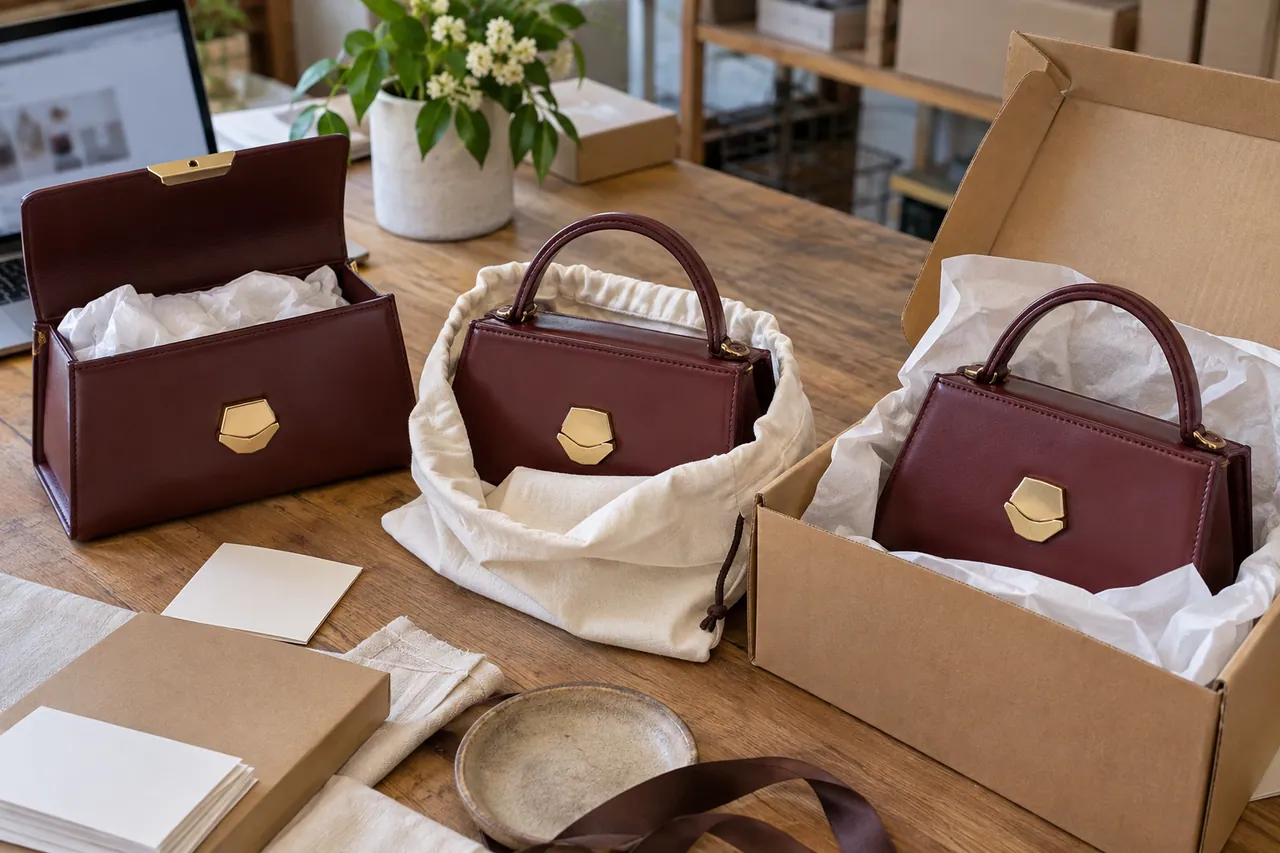
AI illustration comparing tissue filling, dust-bag and carton protection for burgundy handbags. Image: 1688bags.com.
Start with what has to survive
The site's small-order packing guide recommends starting with what must arrive intact: body shape, surface finish, corners, handles, straps and hardware. Its key point is that folding, stuffing, dust bags and gift boxes solve different problems, and none of them is a universal low-cost option.
The guide compares the options this way:
- Folded. Reduces space for a suitable soft bag. Check the allowed fold points and how much creasing is acceptable.
- Stuffed or supported. Helps the bag keep its shape. Check the support material, the pressure on the bag and the final dimensions.
- Dust bag or separator. Separates surfaces and accessories. Check that the material suits the bag and how hardware touches other surfaces.
- Gift box. Retail presentation. Check whether every unit needs one, and how the box itself is protected.
- Export carton. Contains and protects the shipment. Check carton layout, void fill, packed size and weight.
A dust bag is not a replacement for an outer shipping carton, and display packaging and transport protection should be treated as separate choices.
Approve changes instead of asking for the smallest box
It is tempting to ask the warehouse to make the parcel as small as possible. The packing guide advises against that as a blanket instruction. Instead, say what can be removed, retained or replaced: seller cartons, tissue, retail boxes, tags and protective wraps. Ask before labels or accessories your shop needs are removed. Keep hardware away from surfaces it could mark, and keep straps from being sharply compressed.
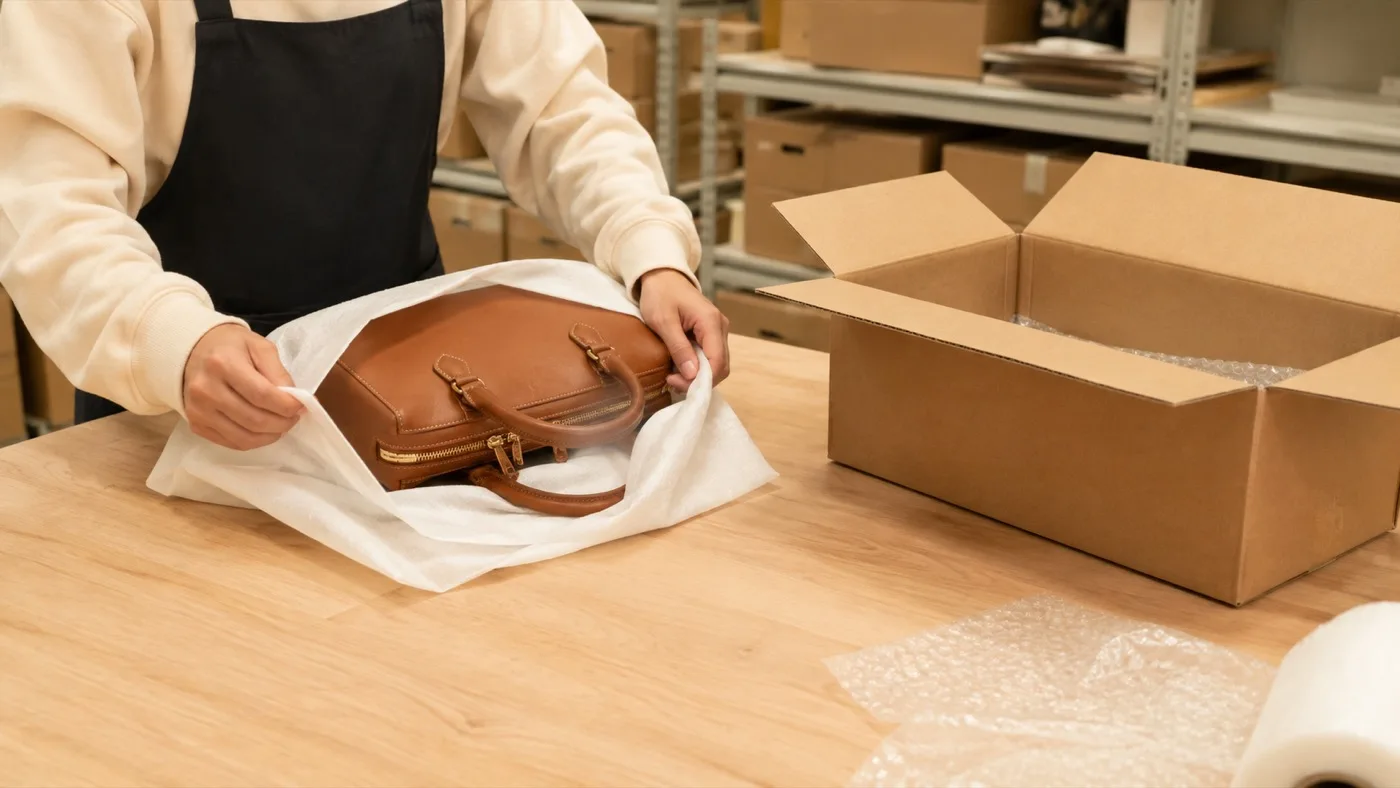
Illustration of the repacking step before a bag carton is sealed. Image: 1688bags.com.
This matters because the QC inspection page treats packing compression as a real risk and suggests before-and-after packing photos for anything where shape matters. The QC failure guide lists packing risk as a hold trigger and includes "upgrade packing" as an option when a bag passes inspection but its protection does not.
Compare complete packed options
The packing guide includes a worked example to show why size and cost do not move in a straight line. It supposes 20 bags fitting a 60×40×40 cm carton with gift boxes, or a 60×40×30 cm carton with stuffing and dust bags. At an assumed divisor of 5000, the dimensional basis falls from 19.2 to 14.4 kg. The guide is explicit that this is not a matching freight saving, because actual weight, billing rounding and surcharges may control the invoice, and the carton sizes are editorial assumptions rather than a quote.
The practical lesson is to request two approved packing options and compare the cost and size implications of each, rather than assuming the smaller one wins. The smallest parcel may create an unacceptable presentation or damage risk, and unknown repacking or freight fees stay pending until confirmed. The site's DDP shipping page lists packing preferences among the inputs a route quote depends on, and notes that special packing is not automatically included.

Bags being repacked for export shipping. Image: 1688bags.com.
Ask for packing evidence
The guide suggests agreeing the packing evidence that suits the order: an open-carton view, examples of how items are protected, and the final carton count and measurements. The QC photo protocol adds a packing shot to its fixed list, showing protection, folded state and carton ID. These are requirements to agree with the desk, not a claim that every request includes the same service.
For multi-seller orders, check whether different bag structures can safely share a carton, and review QC before packing conceals the relevant details. Then confirm the final route quotation and the release instruction.
Packing and your selling format
Packing should follow how you sell. A boutique that displays bags on shelves may need retail boxes or dust bags for each unit. An online shop that photographs and reships may prefer compact, well-supported packing and its own presentation at home. Event buyers may care more about consistent condition across many identical units. Write the selling format into the brief so the desk understands why a box or tag must stay.
It is also worth thinking about what your customer will unpack. If a dust bag or hangtag is part of what you sell, a missing one is not a packing detail but a missing accessory, which the site treats as a QC hold trigger. Listing the expected contents of each unit in the brief makes that easy to check before the carton is closed.
FAQ
Is folding a bag always cheaper?
No. The site says no packing method is a universal low-cost option, and freight depends on actual weight, rounding and surcharges as well as size.
Can I remove gift boxes to save space?
Only if your selling format allows it. The packing guide recommends approving what can be removed rather than asking for the smallest box.
Can I ask for photos of the packed carton?
Yes. The site suggests agreeing an open-carton view, protection examples and the final carton count and measurements.
Want packing options compared in your quote? Share your bags and selling format through the sourcing request page.
Contact 1688 Bags: email sales@1688bags.com · 1688bags.com